💳 Credit Card Perks That Sound Good But Rarely Work (2026 Guide)
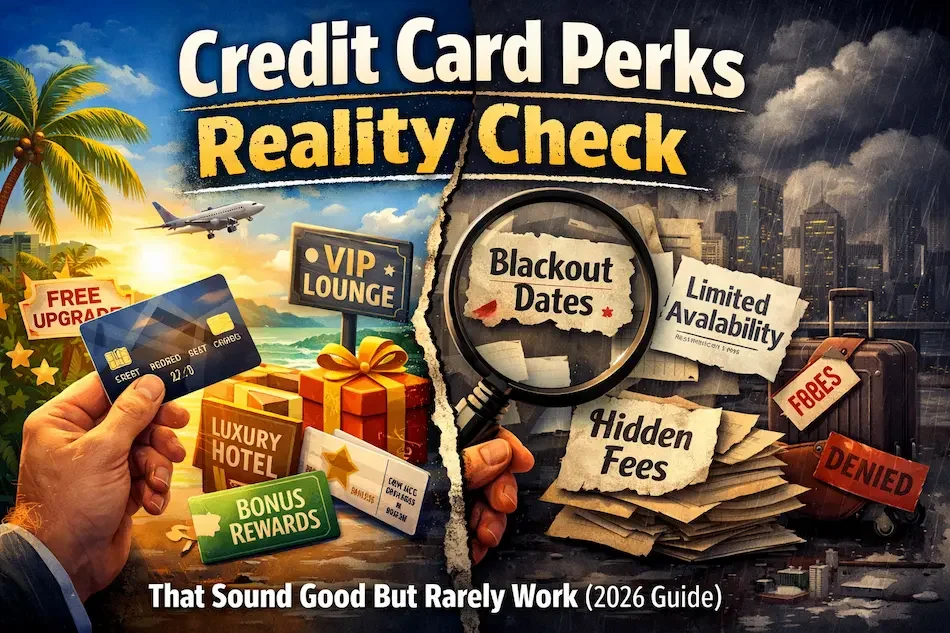
Credit card perks can look incredible on paper — luxury upgrades, concierge services, elite programs, exclusive dining access, and “premium” travel benefits. But here’s the truth most people don’t talk about: a lot of these perks sound amazing but rarely deliver real value.
Some perks are too restrictive. Some require extra spending. Some only work in specific cities. And some are so complicated that most people never use them at all.
This guide breaks down the perks that look exciting but often disappoint, plus what to use instead so you can save money without the frustration.
This post may include affiliate links. I only share products and tools I personally use and trust — at no extra cost to you.
✨ Ready to Stack & Save?
Skip the “fancy” perks and start using the ones that actually work. Explore the Stack & Save Credit Card Hub for beginner‑friendly guides, real examples, and strategies that help you travel smarter — no fine print required.
🧩 Why Some Perks Don’t Live Up to the Hype
Many credit card perks fall short because they require:
extra spending
specific merchants
advance planning
blackout dates
phone bookings
limited availability
geographic restrictions
The result? A perk that looks premium but delivers little (or zero) real value.
🚫 Perks That Sound Good But Rarely Work
1. Concierge Services
Concierge perks promise:
hard‑to‑get reservations
event tickets
personalized planning
But in reality:
they often use the same online tools you do
they can’t override restaurant policies
they rarely secure “impossible” reservations
response times can be slow
Better alternative: Use dining credits (Resy, Amex Gold/Platinum) + your Stack & Save method for real savings.
2. Luxury Hotel Programs With Blackout Dates
Programs like Fine Hotels & Resorts or Luxury Collection perks sound incredible:
upgrades
late checkout
breakfast credits
But the limitations are real:
only valid at expensive properties
blackout dates during peak travel
limited availability for upgrades
often require booking through a specific portal
Better alternative: Use:
free night certificates
elite status benefits
portal stacking
AccorPlus, Radisson, Orbitz
These deliver more consistent value.
💡 A Quick Note: Some Perks Do Work — If Your Situation Fits
I actually love the Fine Hotels & Resorts credit — but it’s one of those perks that only shines if your lifestyle lines up with the rules.
For me, it works because:
I live near Nashville, a city with multiple FHR properties
I can jump on last‑minute price drops
I know how to stack it with points, promos, and off‑peak dates
I treat it like a bonus luxury night, not a guaranteed upgrade machine
But for a lot of people, the FHR credit becomes frustrating because:
the best hotels are in big cities
prices spike during peak travel
upgrades aren’t guaranteed
you must book through Amex Travel
availability can be limited
So yes — it’s a fantastic perk when the stars align. But it’s not universally valuable, and that’s exactly why it belongs in a “sounds good but doesn’t always work” guide.
How to Actually Use Fine Hotels & Resorts (Without Overpaying)
If you do want to make the FHR credit work, here’s my full guide on how to use it strategically — including price‑drop timing, stacking, and when it’s worth skipping altogether. → Conrad Nashville
3. Airline Incidental Credits With Strict Rules
Some airline credits only work for:
seat upgrades
baggage fees
onboard snacks
specific carriers
And many require:
pre‑selecting an airline
avoiding gift cards
avoiding airfare purchases
Better alternative: Use travel credits that apply automatically (Chase Sapphire Reserve, Venture X).
4. Dining Credits With Limited Merchants
Dining credits are great when you live near participating restaurants. But many cards limit credits to:
specific cities
specific chains
specific apps
If you don’t live near those merchants, the perk becomes useless.
Better alternative: Use credits that work anywhere (Uber, travel credits, hotel credits).
5. “Premium” Partner Benefits That Require Phone Bookings
Some perks require calling a special number to book:
luxury hotels
premium flights
curated experiences
The issues:
long hold times
limited availability
no ability to compare prices
no portal stacking
Better alternative: Use online portals where you can stack:
points
promos
cash back
elite benefits
6. Shopping Credits for Stores You Don’t Use
Some cards offer credits for:
high‑end retailers
niche brands
seasonal merchants
If you wouldn’t shop there normally, the credit becomes a trap — encouraging spending you wouldn’t do otherwise.
7. “Exclusive Access” Perks
These perks promise:
VIP events
presale tickets
exclusive experiences
But often:
events sell out instantly
availability is limited
the “exclusive” price isn’t actually a deal
Better alternative: Use:
portal bonuses
These deliver real, trackable savings.
🧠 Why These Perks Fail (The Hidden Pattern)
Most disappointing perks share the same issues:
too many rules
too many restrictions
too much effort
too little availability
too much required spending
A perk should feel easy and automatic — not like a part‑time job.
✨ Perks That Do Work (And Are Worth Keeping)
These perks consistently deliver real value on cruises, hotels, and everyday travel:
travel credits
dining credits
lounge access
CLEAR credits
Global Entry/TSA PreCheck
free night certificates
elite status benefits
travel insurance
These are the perks I use every single trip — and the ones that justify annual fees.
🧭 Final Thoughts: Don’t Fall for “Fancy” Perks
The best credit card perks aren’t the ones that sound glamorous — they’re the ones you actually use. When you focus on practical, easy‑to‑use perks and skip the complicated ones, you’ll save more money with less effort.
This is exactly why your Stack & Save strategy works so well: it’s built on real perks, real savings, and real examples — not hype.
Related Resources
If you want more practical, beginner‑friendly strategies, these guides pair perfectly with this post:
About the Author
Julie Davis runs No Point Left Behind, a travel‑hacking blog focused on practical perks, real savings, and beginner‑friendly strategies. She helps families and retirees travel more for less — without the hype.
