Stack and Save Series - Your Cards

Day 2 — Your Cards
A simple way to understand what each card is for so you stop guessing.
Most people have a wallet full of cards — but no clear idea what each one is actually for. They swipe whatever’s handy and hope for the best.
That’s fine for everyday spending. But if you want to start stacking, you need to know your cards like you know your favorite coffee order.
This post may contain affiliate links and my own personal referral links. If you choose to use them, I may earn a small commission or bonus at no extra cost to you. I only share tools and resources I personally use and trust. Thank you for supporting No Point Left Behind.
If you’re new here, this post is part of my 14‑Day Stacking Starter Series — a simple, beginner‑friendly guide that teaches you how to stack points, miles, offers, and perks the way real families actually use them. You can start the series from Day 1 here: 👉 The 14‑Day Stacking Starter Series
Why This Matters
Every card has a job. Some earn more points. Some give you credits. Some protect your purchases. Some unlock travel perks.
When you know what each card’s job is, you stop guessing — and start stacking intentionally.
If you want a deeper dive into how stacking works, you can also read: 👉 The Stack & Save Hub
Step 1: Sort Your Cards by Category
Pull out your cards and make three quick piles:
Everyday Cards — the ones you use for groceries, gas, dining, or online shopping.
Travel Cards — the ones with airline, hotel, or lounge perks.
Specialty Cards — the ones with unique credits (Uber, streaming, dining, etc.).
You’ll use these piles later in the series to build your first stack.
If you want help identifying which perks you already have, check out: 👉 My Beginner’s Guide to Credits & Perks
Step 2: Identify Each Card’s “Superpower”
Look at each card and ask:
“What does this card do better than the others?”
Examples:
Chase Freedom Unlimited → earns 3% on dining and 1.5% on everything else.
Amex Gold → earns 4× points on dining and groceries.
Capital One Venture X → earns 2× on everything and gives travel credits.
That’s the card’s superpower. You’ll use it as the anchor for your stacks.
Step 3: Label Them in Plain English
Forget the fancy names. Write what each card is for on a sticky note or in your phone:
“Dining + Groceries”
“Travel + Lounge Access”
“Online Shopping”
“Credits + Offers”
This makes it easy to remember which card to grab — and which ones to pair later.
Step 4: Keep It Simple
You don’t need 10 cards. You just need to know what your cards do.
If you’re a beginner, start with:
one everyday card
one travel card
one perks card
That’s enough to start stacking without overwhelm.
Real‑Life Example
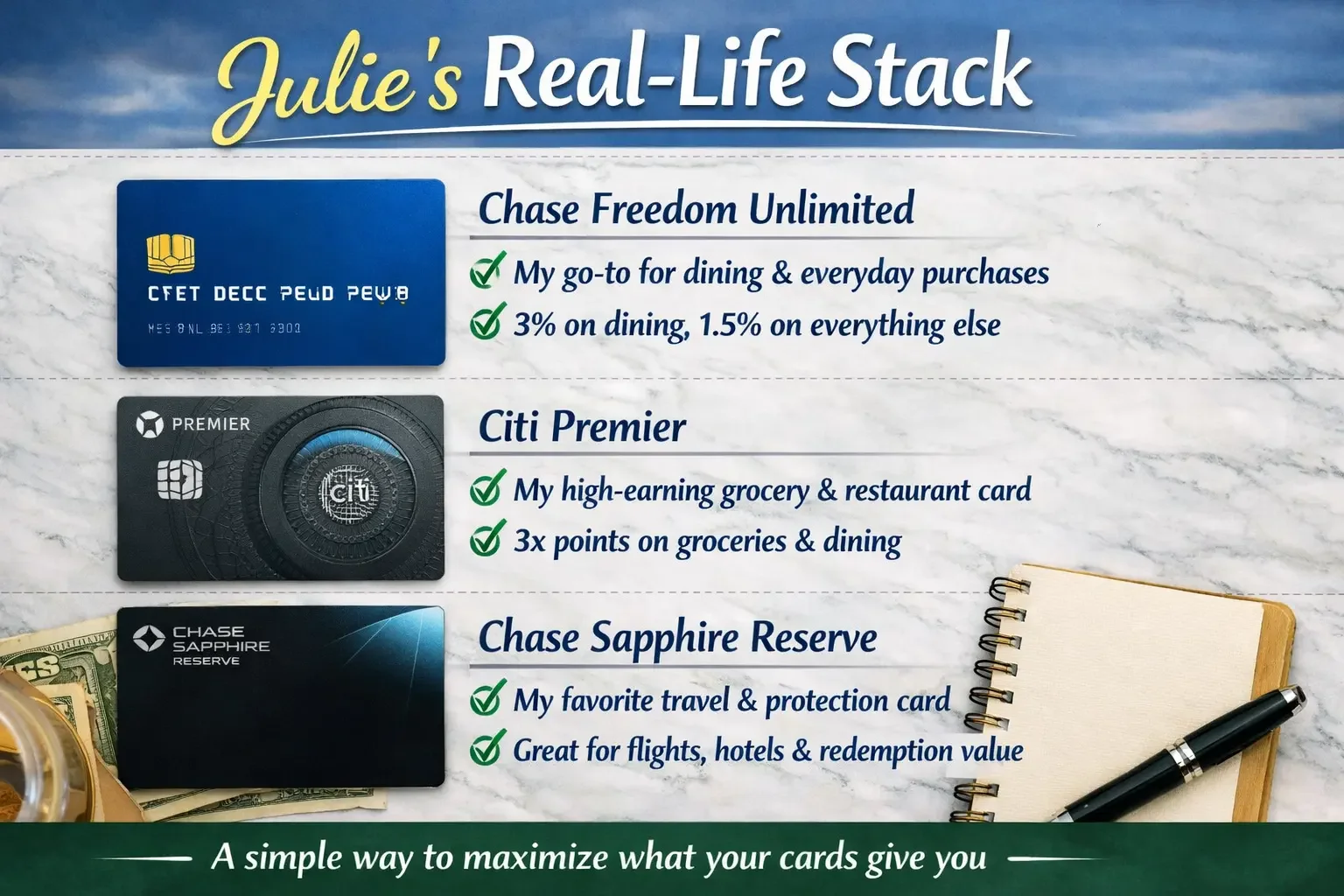
Julie uses:
Chase Freedom Unlimited
Chase Freedom Unlimited— My go‑to everyday card for dining and general purchases. It earns 3% on dining and 1.5% on everything else, which makes it the backbone of my simple daily stack.
Citi Strata Premier
Citi Strata Premier— This is my high‑earning grocery and restaurant card. It earns 3× points in both categories, which makes it incredibly valuable for families who spend heavily on food.
Chase Sapphire Reserve
Chase Sapphire Reserve — My main travel card. I use it for flights, hotels, and anything that needs strong travel protections. It also unlocks better redemption rates and pairs perfectly with my Freedom Unlimited.
Next Step
Now that you know what each card is for, you’re ready to start using your credits intentionally.
👉Day 3 — Your Credits Learn how to track and use your credits so you never waste money again.
Or head back to the 👉 14‑Day Stacking Starter Series Hub to jump to any day in the series.
About the Author
About the Author Julie Davis is the creator of No Point Left Behind (.net) — a travel‑hacking strategist who has paid for exactly one plane ticket in cash since 2019. She has turned everyday spending into 20–30 free round‑trip flights a year, including casino cruises and family adventures across the U.S., Europe, Alaska, and the Caribbean. After 20 years as a stay‑at‑home mom, she built NPLB to help families travel smarter using the cards and perks they already have. She now runs the Travel Hacking Moms Group on Facebook and teaches beginner‑friendly strategies that make points and miles feel simple, not stressful.
