Credit Card Perks You're Probably Not Using
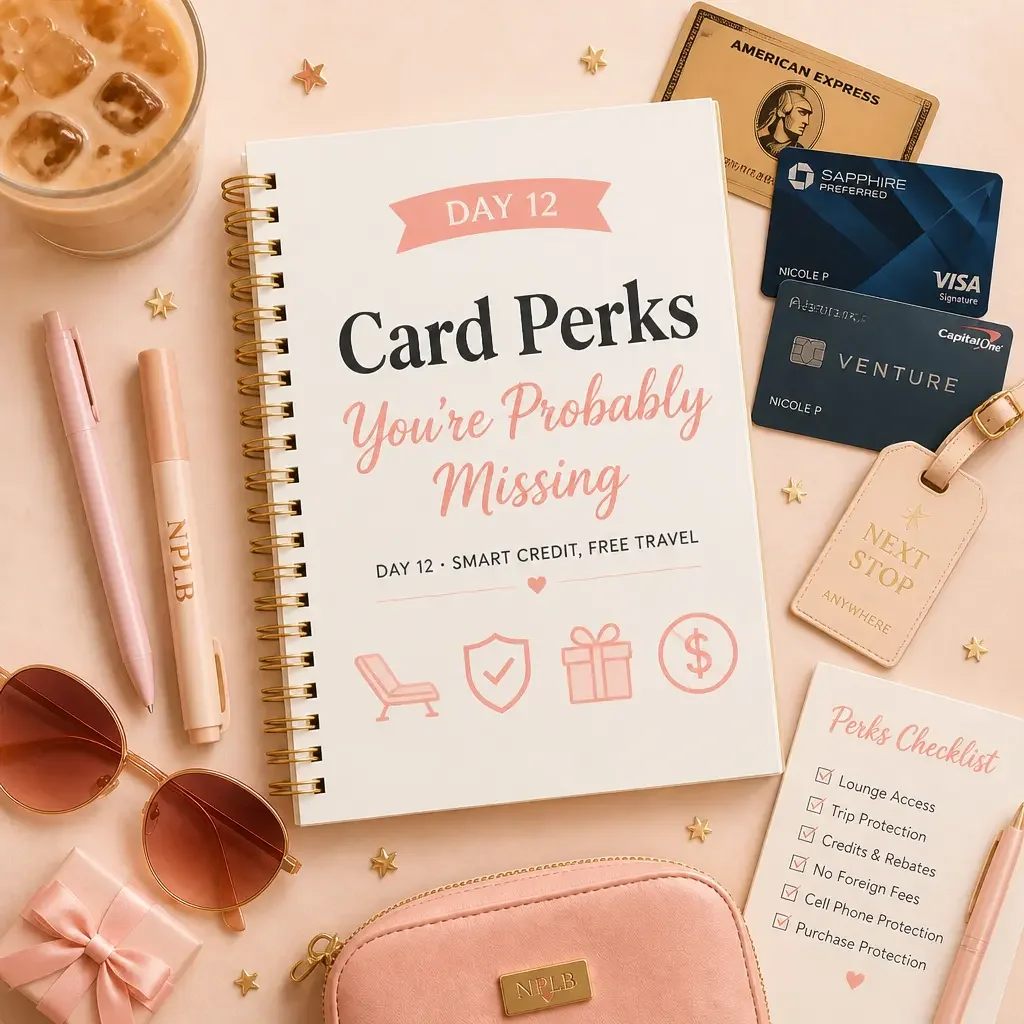
Points and miles get all the attention. But the card in your wallet right now might be saving you thousands in ways you never thought to check.
We've spent 11 days talking about earning points — how to stack them, transfer them, and turn them into free flights and free hotel nights. And all of that is amazing. Truly. It's the engine that powers my family's entire travel life.
But here's something most travel hackers don't talk about enough: the perks that have NOTHING to do with points.
Your credit cards come with benefits that can save you hundreds — sometimes thousands — of dollars every single year. Travel insurance. Cell phone protection. Extended warranties. Free airport lounge access. Rental car coverage. And most people never use them because they don't even know they exist.
I'll be honest: I didn't always pay attention to these either. When I started travel hacking over 20 years ago, I was 100% focused on earning points. That was the whole game for me. But then I got stranded. Four times. In one year. And suddenly, travel insurance wasn't just a "nice perk" — it was the thing that saved me thousands of dollars.
That's when I realized: the perks might be worth as much as the points.
Today, I'm handing you a treasure map. Everything I'm about to walk you through? You might already be entitled to it. You just didn't know to look.
Heads up — this post contains affiliate links to credit cards I personally use and recommend. If you apply and are approved through my links, I may earn a commission at no extra cost to you. The perks I'm sharing in this post are ones I actually use myself. Thank you for supporting No Point Left Behind!
Travel Insurance — The Perk That Saved Me Thousands
Let me tell you what happened to me in 2025.
I got stranded in four different cities. Four. Weather delays, cancellations, the whole nightmare — the kind of travel chaos that makes you want to give up and drive everywhere for the rest of your life. Flights rerouted. Connections missed. Hours sitting in airports wondering if I was ever getting home.
And every single time, I filed a claim through my Chase Sapphire's trip delay insurance.
Now, I want to be real with you: the process isn't instant. You have to gather documentation — your boarding passes, delay notifications from the airline, receipts for the hotel room you had to book at midnight, receipts for the meals you ate while waiting. You submit it all, and then you wait for processing. It's not glamorous.
But the coverage is real. Hotel rooms, meals, ground transportation — covered. Across four cities. The reimbursements added up to thousands of dollars that would have come straight out of my pocket otherwise.
Here's what travel insurance on your credit card typically covers:
Trip cancellation and interruption: If you have to cancel a trip or your trip gets cut short due to covered reasons — illness, severe weather, jury duty, and more — you can be reimbursed. On the Chase Sapphire Preferred, coverage goes up to $10,000 per person and $20,000 per trip.
Trip delay: When your flight is delayed more than a certain number of hours (usually 6–12 depending on the card), your card covers meals, hotel stays, and transportation. This is the one I used four times in 2025.
Lost luggage insurance: If the airline loses your bags, your card may cover up to $3,000 per passenger for the contents.
Rental Car Insurance — Skip the Counter Upsell
You know the moment. You're at the rental car counter, exhausted from your flight, and the agent starts the upsell: "Would you like to add our collision damage coverage for just $29.99 a day?"
For years, I said yes because I didn't know any better. Then I found out my credit card already covered it.
Here's how credit card rental car insurance — called a Collision Damage Waiver (CDW) — works:
Most premium and mid-tier travel cards include rental car coverage automatically.
You decline ALL of the rental company's insurance at the counter.
You pay for the rental with your covered credit card.
If the car is damaged in a collision, you file a claim through your credit card issuer.
One important distinction: some cards offer primary coverage (your card pays first, no questions asked), while others offer secondary coverage (your personal auto insurance pays first, then the card covers the rest). Primary coverage is better — look for it on premium travel cards.
The savings? $15–$30 per day. On a week-long rental, that's $105–$210 you're keeping in your pocket instead of handing to the rental counter. I haven't paid for rental car insurance at the counter in years. My credit card covers it.
Cell Phone Protection — The Sleeper Hit
This is the perk I tell every mom about first.
Here's how it works: pay your monthly cell phone bill with certain credit cards, and you automatically get damage and theft protection on your phone. That's it. No separate enrollment. No extra fee. Just use the right card to pay your phone bill.
The coverage is surprisingly good:
Up to $800 per claim (with a small deductible, usually $25–$50)
Covers cracked screens, water damage, and theft
Covers the primary cardholder AND everyone on the same phone plan — yes, your whole family
Available on many premium cards and even some mid-tier cards
Now, let's do the math — because this is where it gets really good.
📱 The Family Phone Plan Math
If you have a family phone plan with 4 lines and you're paying your carrier $10/month per line for device protection insurance:
4 lines × $10/month × 12 months = $480/year
Your credit card might cover the same thing for FREE — you just have to pay your phone bill with the right card.
That's $480 back in your pocket every single year. And you don't have to do anything differently except change which card auto-pays your phone bill.
I know. I know. When I first figured this out, I was equal parts thrilled and annoyed at myself for not knowing sooner. If you take nothing else from today's post, take this: check if your card offers cell phone protection, and if it does, switch your phone bill to that card today.
Extended Warranty & Purchase Protection — Your Built-In Safety Net
These two perks are quiet heroes. They don't save you money every month — they save you money at exactly the moment something goes wrong.
Extended Warranty
You know how the cashier at the electronics store asks if you want the extended warranty for $49.99? Say no. Your credit card might already give you one.
Many cards automatically add up to 1 additional year to the manufacturer's warranty on purchases made with the card.
Covers products with original warranties of 3–5 years or less (varies by card).
No extra cost — it's automatic when you use the card.
Works on electronics, appliances, and more.
That new laptop with a 1-year warranty? It might now have a 2-year warranty just because you put it on the right card. The TV you bought for the living room? Same thing. You didn't pay a dime extra, and you're covered longer.
Purchase Protection
This one is for all the parents out there.
Purchase protection covers new purchases against accidental damage or theft for 90–120 days after you buy them. Some cards cover up to $500–$10,000 per claim.
Your kid knocks your brand-new iPad off the kitchen counter two weeks after you bought it? If you purchased it on the right card, you might be covered. Your new sunglasses get stolen out of your bag on vacation? Covered.
I'm not saying you should be reckless with your stuff. I'm saying accidents happen — especially when you have kids — and it's nice to know there's a safety net you already paid for.
Travel Credits & Statement Credits — Free Money You Might Be Ignoring
Okay, this section is going to connect directly back to Day 6, when we talked about annual fees. Remember how I said you should re-evaluate every card every year when your annual fee hits? This is why.
Many cards come with annual or monthly credits that effectively reduce — and sometimes eliminate — your annual fee. Here's what to look for:
Global Entry / TSA PreCheck credit: A $100 credit every 4–5 years to cover your application fee. If you travel even a few times a year, this is a must-have — it speeds you through airport security and saves your sanity.
Airline fee credits: Annual credits for baggage fees, seat upgrades, in-flight purchases, and more.
Streaming credits: Monthly credits toward Netflix, Spotify, Hulu, Disney+, and other streaming services.
Dining credits: Monthly or annual statement credits for restaurants, food delivery, and more.
Hotel credits: Annual credits toward hotel bookings.
Uber/Lyft credits: Monthly transportation credits.
Here's why this matters so much:
💡 The Annual Fee Math That Changes Everything
A card with a $250 annual fee might come with:
$100 in airline credits
$120 in streaming credits ($10/month)
$100 Global Entry credit (amortized)
That's $320 in value — BEFORE you count a single point.
The card is literally paying you $70 to use it. This is exactly why I said on Day 6 that you can't evaluate an annual fee by looking at the fee alone. You have to count every perk.
But here's the catch: you have to actually USE these credits. A streaming credit you forget to activate is worth $0. An airline credit that expires in December does you no good in January. This is exactly why tracking your perks matters — and why I'll share how I do that in just a minute.
Airport Lounge Access — The Game Changer for Families
I know what you're thinking: "Airport lounges are for business travelers in suits."
No. Airport lounges are for anyone with the right card. And when you're traveling with kids and your flight is delayed three hours? A lounge with free snacks and Wi-Fi is worth its weight in gold.
Some premium cards include airport lounge access through programs like Priority Pass or Centurion Lounges. Here's what you get:
Free food and drinks — real meals, not just pretzels
Comfortable seating in a quiet space away from the gate chaos
Free Wi-Fi that actually works
Clean restrooms — sometimes with showers
Some lounges have kids' areas, nap rooms, and business centers
Think about what you normally spend during a long layover. Overpriced airport food for a family of four? Easily $60–$80. A lounge gives you all of that for free — plus a calm, comfortable place to recharge before your next flight.
If you're a family that travels even a few times a year, lounge access can pay for itself before you ever count the points. And remember — we covered hotel elite status perks on Day 9, like free breakfast and room upgrades. Between lounge access and elite status, your premium card is feeding your family for free at the airport and at the hotel.
A Perk Most People Forget Exists: Concierge Services
This one sounds too fancy to be real, but it is. Many premium cards come with a free concierge service — essentially a personal assistant you can call for help with:
Restaurant reservations (including hard-to-get ones)
Event tickets and experiences
Gift sourcing and delivery
Travel planning assistance
I'll admit, I don't use this one as much as some of the others. But it's there, it's free, and there are times when having someone else handle the research and booking is exactly what a busy mom needs. Planning a birthday dinner at a popular restaurant? Let the concierge handle it.
How I Track All of This (Without Losing My Mind)
✨ What I Do
I'll be real with you: when I started travel hacking, I tracked all my perks and credits in my head. Card A has the streaming credit. Card B has the phone protection. Card C has the travel insurance. That worked fine when I had 2–3 cards.
Once I started building a real stack with premium cards — each with their own set of credits, deadlines, and benefits — I needed help. There's just too much to remember, and the cost of forgetting is real money left on the table.
That's when I started using CardPointers. It tracks every card in my wallet, tells me which card to use for each purchase to maximize rewards, and — this is the part I love most — it reminds me about credits and perks I need to use before they expire.
Monthly streaming credits? It reminds me. Annual travel credits? It tracks them. Cell phone protection? It tells me which card to pay my phone bill with. I went from leaving hundreds of dollars in unused perks on the table to using basically everything my cards offer.
If you're stacking more than 2–3 cards, I genuinely recommend a tool like this to keep you organized. It's the difference between knowing your cards have great perks and actually using them.
Full disclosure: I'm a CardPointers affiliate, which means I may earn a small commission if you sign up through my link — at no extra cost to you. I recommend it because I use it every day, not because of the commission.
Your Homework: The Perks Audit
📝 Today's Assignment: The Perks Audit
Today's assignment is going to blow your mind — or make you a little mad at yourself. Either way, it's important.
Step 1: Pull out every credit card in your wallet. Yes, every single one.
Step 2: Go to each card's benefits page. The fastest way? Google "[your card name] benefits guide" or log into your issuer's website and look for "Card Benefits" or "Your Protections."
Step 3: For each card, write down EVERY perk and protection it offers. Not just the points earning rate — the perks. Use this checklist:
Travel insurance (trip cancellation, trip delay, lost luggage)?
Rental car insurance?
Cell phone protection?
Extended warranty?
Purchase protection?
Streaming or dining credits?
Airline fee credits?
Global Entry / TSA PreCheck credit?
Airport lounge access?
Concierge service?
Hotel elite status?
Return protection?
I guarantee you're going to find at least one benefit you didn't know about. Probably more. And once you see everything laid out, you'll understand why I say the perks can be worth as much as the points.
Bonus: Check if you're paying for any insurance or protection you could cancel — carrier phone insurance, separate travel insurance policies, extended warranties at checkout. Your cards might already have you covered, and you could be saving hundreds of dollars a year starting today.
Why This All Matters
Let me bring this back to the big picture.
On Day 1, I introduced you to credit card stacking. On Day 2, we audited your spending. Over the past 11 days, we've built your stack, earned sign-up bonuses, learned to transfer points, and booked free flights and hotels.
But if you're only focused on earning points, you're leaving real money on the table. The perks — the insurance, the credits, the protections — are a massive part of what makes your card stack valuable.
There is no wrong or right way to do this. The cards that work for me might not be the best for you. But the strategy is the same: know what your cards offer, and use every single benefit you're entitled to.
That's why I re-evaluate every card, every year, when the annual fee hits. I don't just look at the points I earned. I look at the trip insurance that saved me during my four-city nightmare. The cell phone protection that covers my whole family. The streaming credits reduced my annual fee to nothing. The lounge access kept my kids fed and happy during a three-hour delay.
When you count it all up, the perks are what turn a good card into a great one — and an annual fee into a bargain.
About the Author
Julie Davis has been travel hacking for over 20 years — long before anyone she knew was doing it. She's paid for exactly ONE plane ticket with cash since 2019 — her son Tanner hopped on a trip last minute, and even though she had the points, it was cheaper to pay cash that one time. Every other flight? Free.
Her family regularly earns 20–30 free round-trip tickets a year on points alone, plus countless hotel rooms. In 2024, she added casino cruises to her travel hacking playbook. Julie loves traveling with her husband Brandon, her sons Tanner and Finn, her parents, and her best friends — because the best part of free travel is who you get to share it with.
She created No Point Left Behind to prove that travel hacking isn't complicated — it's just a skill nobody taught you yet.
Want to learn alongside thousands of other moms? Join Julie's free Facebook community, Travel Hacking Moms Group, where she shares real-time tips, wins, and answers your questions every day.
