⭐ The Best Beginner Credit Cards for 2026

💡 Lazy Girl Summary (Read This First)
If you’re brand‑new to points and miles, start simple. These are the cards that give you the biggest wins with the least stress:
Best overall beginner card: Chase Sapphire Preferred®
Easiest earning: Capital One Venture®
Premium perks without overwhelm: Capital One Venture X®
Best no‑fee starter: Chase Freedom Unlimited®
Best for groceries + dining: Amex Gold®
If you want help choosing, join my free Facebook group — Travel Hacking Moms Group — where I walk beginners through every step.
⭐ Why Beginner Cards Matter
Choosing your first credit card shouldn’t feel overwhelming. If you’re new to points and miles, these are the best beginner credit cards for 2026 — the cards that are simple, flexible, and easy to use even if you’re juggling kids, work, travel plans, and real‑life chaos.
I love helping beginners start safely with the right card, and these are the ones that consistently deliver real‑life wins without complicated rules or stress.
This page includes affiliate links and personal referral links. I’m not a credit card affiliate — any credit card links you see are my own personal referral links, which may earn me bonus points if you choose to use them. Other links on this page may earn me a small commission at no extra cost to you. I only share cards, tools, and strategies we personally use and trust. Thank you for supporting No Point Left Behind and helping me keep this beginner content free and easy to follow.
⭐ Beginner Credit Card Comparison (2026)
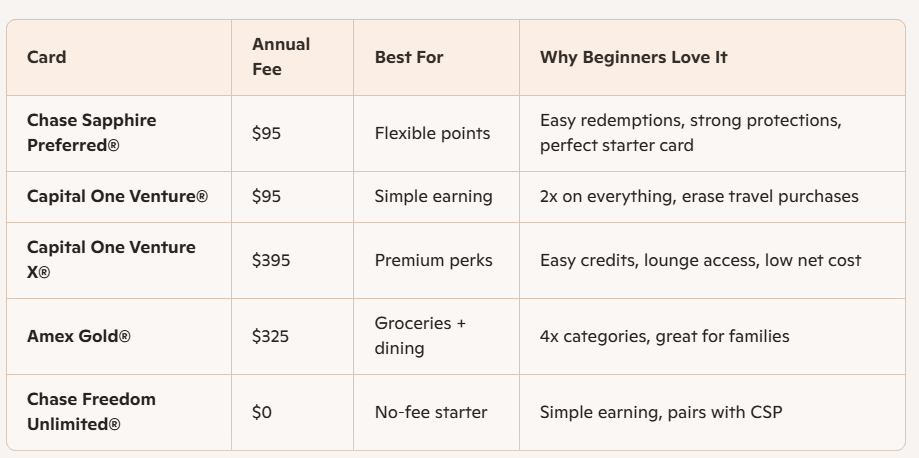
1. Chase Sapphire Preferred®
Best for: beginners who want flexible points and easy redemptions Annual fee: $95
Why it’s great for beginners:
Earns Chase Ultimate Rewards, the easiest points for beginners
Simple 1:1 transfers to Hyatt, United, Southwest, and more
Strong travel protections
Easy‑to‑use travel portal
Pairs perfectly with no‑fee Chase cards
Real‑life example: We’ve used Chase points for flights, Hyatt stays, and even cruise flights — all from simple, everyday spending. I started with the Chase Sapphire Preferred — my go‑to beginner card for flexible points.
I love using Chase Ultimate Rewards for Hyatt stays — so much that I have a page full of our real redemptions. We’ve booked everything from weekend getaways to national park trips using simple Chase points earned from everyday spending. 👉 See my full list of Hyatt redemptions for inspiration.
2. Capital One Venture®
Best for: beginners who want simple earn + burn Annual fee: $95
Why it’s great:
Earns 2x miles on everything
Redeem miles to erase travel purchases
Easy for beginners who don’t want to learn transfer partners yet
Still has strong transfer partners when you’re ready
Real‑life example: We’ve used Venture miles to erase flights, hotels, and even cruise‑related travel expenses. If you want simple earnings, the Capital One Venture is an easy first step
One of our biggest beginner wins ever was using Capital One Venture miles to erase a huge portion of our Princess Alaska cruise cost. We stacked a casino offer + a sign‑up bonus, and then used Venture miles to wipe out the remaining balance — bringing a $4,000+ Glacier Bay cruise down to just $325 out‑of‑pocket.
👉 See exactly how we did it here: Princess Alaska Cruise for $325
3. Capital One Venture X®
Best for: beginners who want premium perks without premium stress Annual fee: $395
Why it works for beginners:
$300 annual travel credit (easy to use)
10,000 anniversary miles (worth ~$100+)
Priority Pass + Capital One Lounge access
Simple earning structure
Why it’s beginner‑friendly: The credits are effortless, which makes the net cost low — even for beginners. For premium perks without premium stress, the Venture X is my favorite upgrade path
4. Amex Gold®
Best for: beginners who spend on groceries + dining Annual fee: $325
Why it’s great:
4x at restaurants
4x at U.S. supermarkets
Easy‑to‑use dining credits
Great for families
Real‑life example: We earn thousands of points a year just from groceries + dining — no complicated strategy needed. I recently got rid of this card after the annual fee went up. It didn’t make sense for us anymore.
We earned thousands of points a year with the Amex Gold just from groceries and dining — it’s an extremely popular card for a reason. But as the annual fee kept climbing, it stopped making sense for our family. I eventually canceled it and switched to the Citi Strata Premier because it earns 3x on groceries and gas with a much lower annual fee. 👉 Here’s why I made the switch: Citi Premier vs Amex Gold — My Real Decision
5. Chase Freedom Flex® or Freedom Unlimited®
Best for: beginners who want a no‑fee starter card Annual fee: $0
Why they’re perfect for beginners:
No annual fee
Strong earning categories
Pairs with Sapphire Preferred for big value
Great first card if you’re nervous about fees
Flex = rotating 5x categories Unlimited = simple 1.5x on everything
Real‑life example: We use these cards to boost our Chase points without paying extra fees. The Chase Freedom Unlimited is the card I am going to start my son on. As soon as he gets a job!
Need help building your credit card lineup? I’ve got you. My Build Your Credit Card Lineup Series walks you through the exact step‑by‑step strategy I use to choose cards, pair them, and build a long‑term system that actually works in real life. No overwhelm. No guesswork. Just a clear plan.
⭐ Which Card Should You Start With?
If you want the simplest path:
Start with Chase Sapphire Preferred
It’s the easiest, safest, most flexible beginner card — and it sets you up for long‑term success.
If you want simple earning:
Start with Capital One Venture
No categories. No stress. Just easy points.
If you want premium perks without premium confusion:
Start with Venture X
The credits are effortless, and lounge access is a huge win for families.
If you want no annual fee:
Start with Freedom Flex or Unlimited
Perfect first card if you’re nervous about fees.
⭐ What NOT to Start With
Avoid these as your first card:
Amex Platinum (too many credits to track)
Chase Sapphire Reserve (start with Preferred first)
Airline cards (too narrow for beginners)
Hotel cards (great later, not first)
These cards are amazing — after you have a strong foundation.
⭐ How to Choose the Right Beginner Card
Ask yourself:
Do I want simple or flexible?
Do I want to learn transfer partners or keep it easy?
Do I want perks or just points?
Do I want to avoid annual fees?
⭐ What to Read Next
To help you start safely and confidently:
👉 Beginner Guide: How to Start With Points in 2026
👉 Unpacking Credit Card Perks vs Risks
👉 How to Stack Credit Card Perks Without Getting Burned
👉 How to Book Award Travel (Step‑by‑Step)
ABOUT THE AUTHOR
Julie is a travel hacker, family travel expert, and the creator of No Point Left Behind, a fast‑growing resource for practical itineraries, cruise tips, hotel strategies, and beginner‑friendly points‑and‑miles guides. She specializes in helping families stretch their budget, maximize rewards, and plan trips that feel effortless. Her content blends real‑life experience, honest reviews, and clear, jargon‑free advice designed to make travel accessible for every family.
Want help choosing your first card or stacking perks safely? Join Julie’s free Facebook community: Travel Hacking Moms Group
